תורה בדרכו של אלן וינר
Ben and Shafrira Wiener
This is my favorite Dvar Torah that I heard from Grandpa and I quote it all the time. I think it typifies Grandpa's inquisitive and creative approach to learning.
The famous gemara in Mesechet Shabbat (דף פ״ח) says:
ויתיצבו בתחתית ההר - א"ר אבדימי בר חמא בר חסא מלמד שכפה הקב"ה עליהם את ההר כגיגית ואמר להם: אם אתם מקבלים התורה מוטב ואם לאו שם תהא קבורתכם
When Bnei Yisrael gathered at Har Sinai to receive the Torah, the pasuk says they gathered “at the base” of the mountain; but the word “בתחתית” can be interpreted “underneath.” So Rav Avdimi famously interprets this to mean that Hashem “put the mountain over them like a barrel” and thereby threatened Bnei Yisrael with death (literally, “burial”) if they would not accept the Torah. (According to the continuation of the gemara, Bnei Yisrael “recommitted” themselves to the Torah at the time of Megillat Esther).
This “threat” alleged by Rav Avdimi has raised theological questions for generations, but Grandpa looked at it from a different angle and I think he nails the correct p’shat.
We can't necessarily “darshen” the language of Chazal like the text of the Torah itself; but on the other hand when Chazal use strange words, we have to pay attention. Why, according to Rav Avdimi, if Hashem was threatening Bnei Yisrael with immediate death if they would not accept the Torah, does he use the phrase, "He put the mountain over them like a barrel”? It would be a greater threat to ... say, for instance, “He held the mountain over them like a ... mountain?”
This is what it looks like to put a barrel over people:
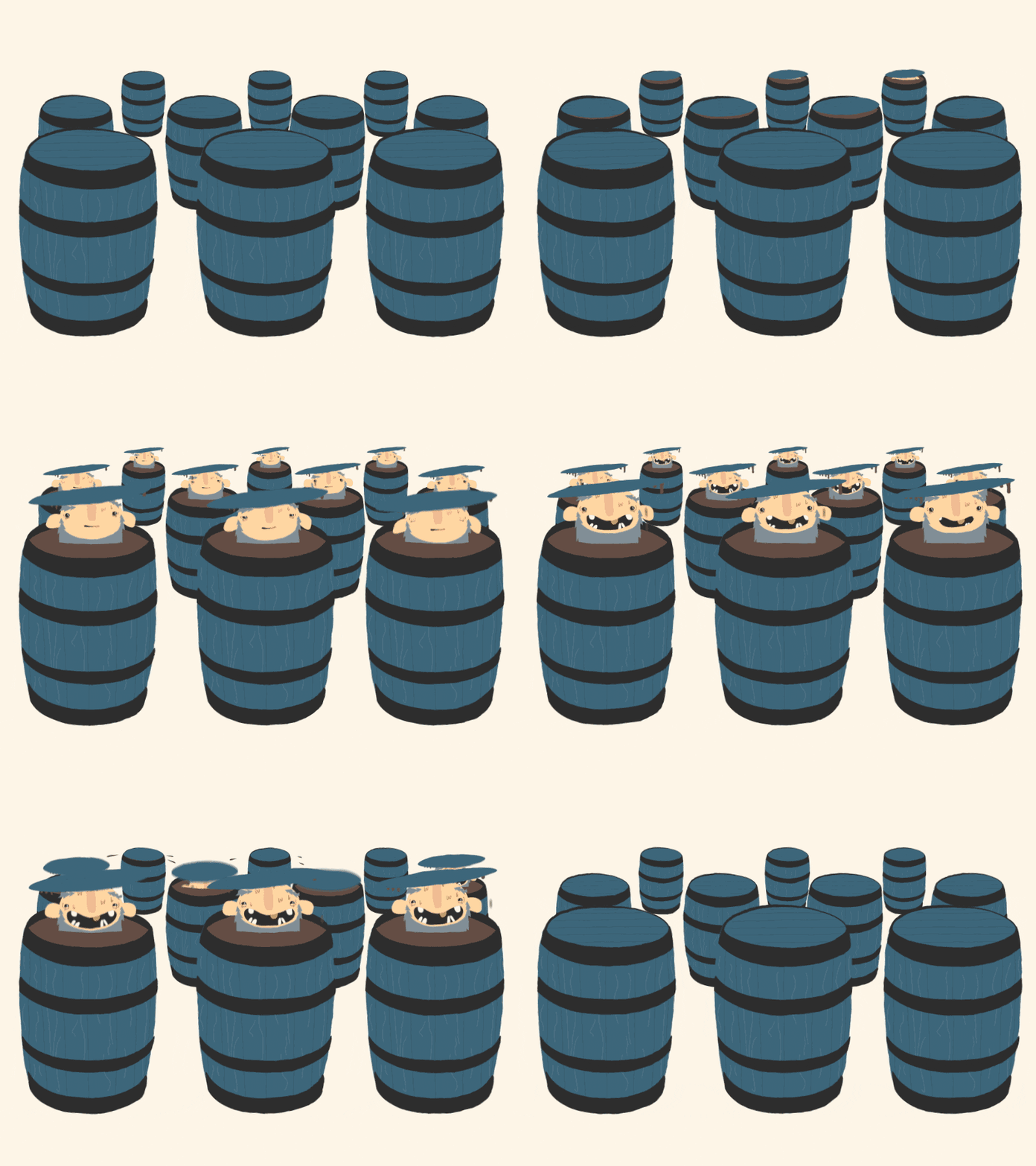
And this is what it looks like to drop a mountain on people:
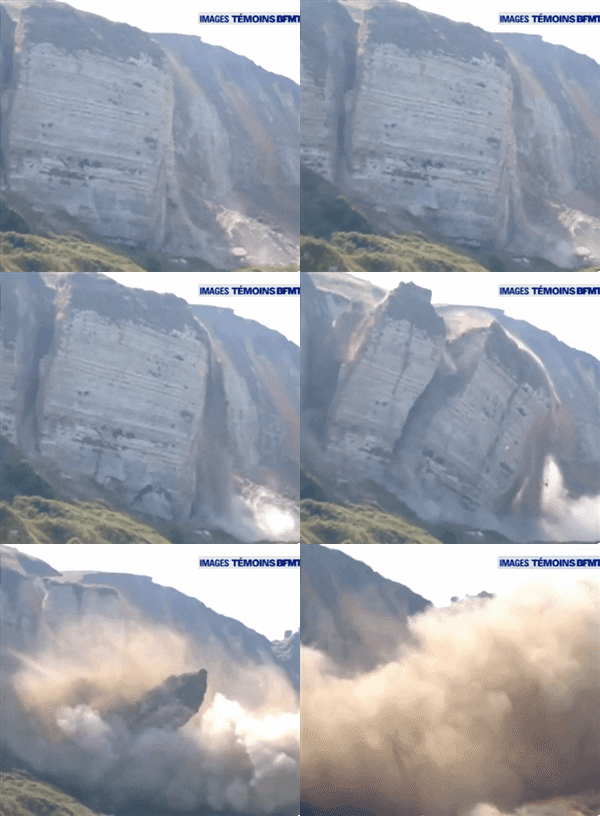
Which looks like the bigger threat?
Furthermore looking even more closely at Rav Avadimi's language, there's another question. He says Hashem said, “… and if you don’t accept the Torah, you will be buried שם- there.” Not “here.” If Hashem was literally or figuratively going to crush them with a mountain, wouldn't they be buried right “here,” at Har Sinai, and not somewhere else, “there?”
If I recall correctly, Grandpa solved the puzzle when he was learning Daf Yomi. Masechet Sanhedrin (דף ע״ז) brings the following case and machloket Amoraim:
איתמר כפה עליו גיגית … רבא ורבי זירא חד אמר חייב וחד אמר פטור
Grandpa noted that this unusual case uses the same language as Rav Avdimni in Shabbat. When someone places a barrel over someone else and that second person dies, the death is caused indirectly and therefore one of the amoraim says that the person who placed the barrel is not guilty of murder (medoraita; obviously do not try this at home). Rashi, explaining how the death of the person inside the barrel is caused indirectly, says:
כפה עליו גיגית - ומת בהבלא
The person dies in “הבלא”….
What is הבלא? Rashi presumably, using the scientific knowledge of the day, intends that the person in the barrel is suffocated by his own expelled breath (e.g. “הבל פיו”), and therefore, according to the opinion who says פטור, the death is indirect.
But doesn’t the word “הבל” remind you of something else?

“הבל” is futility, purposelessness, the absence of meaning.
So this solves the puzzle.
Rav Avdimi’s famous saying does not mean what people think it means.
It is not an immediate threat.
Hashem says:
If you don’t accept the Torah- you will die. Not now, not “here” at Har Sinai; rather - “שם תהא קבורתכם”, later, in the future, and not caused by Me. Like a person in a barrel. You will “die” in, or by, “הבל” - the absence of meaning.
According to Grandpa, Rav Avdimi chooses his unusual wording very carefully and purposefully. Hashem was not bullying Bnei Yisrael at the momentous ma’mad Har Sinai, into accepting the Torah under duress. He was teaching Bnei Yisrael, that if they chose not to follow the Torah, they would endure lives of meaninglessness and “die” spiritual deaths.
This Dvar Torah is not only a creative and, I think, accurate insight into the meaning of Rav Avdimi’s famous but cryptic drasha, but it also typifies Grandpa's approach to life and to Torah. Grandpa has demonstrated, by his words and actions, that following the Torah in an active choice that infuses life with meaning. And, that when learning Torah, we should always approach it with curiosity and fresh perspective.

